Showing posts with label collective action. Show all posts

Saturday, 25 January 2020

UPDATED: Beyond the Wall: Writing a Path Through Palestine (2012/2025)

My 4th book Beyond the Wall: Writing A Path Through Palestine, originally published in 2012, has been been updated and reissued. The original publication was followed by my 5th book, Asylum and Exile: Hidden Voices of London, which was based on my outreach work with asylum seekers, detainees and refugees in London (click the thumbnail on the right for more details).

Beyond the Wall: Writing a Path Through Palestine has been described as "an unflinching portrait of life in the West Bank in the 21st Century" by Andrew Kelly in The Observer. 

ORDER THE UPDATED BEYOND THE WALL: WRITING A PATH THROUGH PALESTINE HERE

In spring 2011 I was invited to tour the West Bank as a guest of Palfest. I knew about the ‘issue’ from casual news watching, despite a longstanding professional involvement in international relations, political analysis, cultural diplomacy and human rights. I am not Muslim and have no Muslim heritage, no Palestinian heritage and no Arab or Middle Eastern heritage. I am not an activist.

I went on the tour and wrote down what I observed, nothing more or less, and these observations became Beyond the Wall. It’s a short, accessible narrative non-fiction piece about ordinary people and daily life, originally published by Seagull Books in 2012. Full details of the original publication, with links to further essays and reviews and a list of events from that time, can be read directly below.

In the book, I focused on character and conversation, setting and community, resilience and survival, atmosphere and daily existence, with the aim of writing something which any reader could engage with.

ORDER THE UPDATED BOOK HERE

Over the last twenty three months I haven’t mentioned Beyond the Wall: Writing a Path Through Palestine in any context. I dislike it when individuals push themselves to the front on a human rights ticket during an emergency. I've seen peers speak persuasively about ethics onstage while being egotistical or abusive offstage and witnessed terrible human beings put their signatures to the petitions and statements of the day, just to look good.

In late 2024 I asked Seagull if I could write a new foreword for Beyond The Wall. They kindly agreed and the essay is as current as we could make it while allowing for production time. It clearly expresses my feelings.

I will not be taking up any media slots to comment on this when there are so many direct reports and testimonies already. I’d like to thank Naveen Kishore and Bishan Samadder at Seagull and all at Palfest.

ORDER THE UPDATED BOOK HERE

Photo of me taken in the West Bank, spring 2011, by poet Nathalie Handal


ORIGINAL 'BEYOND THE WALL' LAUNCH TEXT FROM 2012: 


"An unflinching portrait of life in the West Bank in the 21st Century."

Andrew Kelly, The Observer


I am delighted to celebrate the publication of my fourth book, Beyond the Wall: Writing A Path Through Palestine (Seagull Books/Chicago University Press), which I discuss in a long interview with For Books' Sake. Read Part One here, read Part Two here and Part Three here. There's also a long interview on TYCI and another, by Julie Tomlin, on Digital Women, and another which I did for Time Out Beijing. Further press mentions, hat-tips and interviews have included The New Statesman, World Literature Today, The Mancunion, The List, Platform 51, La Carpa del Feo, Book Elf, The Boar, Time Out Bejing, film-maker and writer Simon Guerrier's site, New Humanist, an interview in Ideas Tap, a long interview in The Asian Writer, Variety, a long interview in The Student Journals, Spiked, Newsclick India, Women's Views on News and The Observer.

Beyond the Wall: Writing A Path Through Palestine is a sharp, immediate reportage published by Seagull Books/Chicago University Press on 15th May 2012. It is the latest release in Seagull’s series of short Manifestos for the Twenty-First Century, which tackle current issues in international political affairs. The publisher’s page can be found here and the Amazon UK page, which has a little bit more blurb, is here.

Beyond the Wall was launched with a panel event at The Mosaic Rooms, entitled Writing A Path Through International Affairs. Journalist Susannah Tarbush has written an excellent report on the event, here. I was joined by Anna Blundy, former Times Moscow correspondent and author of a series of novels about war correspondent Faith Zanetti, inspired by Marie Colvin; poet, economist and novelist Nitasha Kaul, whose debut novel ‘Residue’ was shortlisted for the Man Asian Literary Prize and who has written extensively about global economics, Kashmir, India and Bhutan; and Rosie Garthwaite, who began her reporting career straight out of university and the army in Basra, Iraq, and has worked as a reporter and producer for the BBC, Reuters and Al-Jazeera. Her book How to Avoid Being Killed in a Warzone is a survivors’ guide to staying alive in combat territory.

Beyond the Wall: Writing A Path Through Palestine is "an unflinching portrait of life in the West Bank in the 21st Century" (The Observer), seen through the eyes of its activists, its ordinary citizens, its children, its population of international aid workers, reporters and foreign visitors. From my first experience of the caprices and cruelties of checkpoint culture upon entering the West Bank to a final confrontation with the army in Silwan I report, reflect upon and analyse multiple aspects of life in an occupied territory. Covering Bethlehem, Hebron, Jerusalem, Ramallah, Nablus and Nazareth, speaking to children in the refugee camps at Balata and degree students in the lecture halls of Birzeit University, I share observations of Palestinians from all walks of life. I was both shocked by the behaviour of the military and circumspect about many aspects of Palestinian culture. My final vision balances faith in the vigour of the country's young activists, shock at the perverse effects of military occupation on the mentality of the occupied and the occupiers alike and sorrow at seeing the frustration and anger of the country's youngest citizens.

Wednesday, 4 December 2013

Taking action on the global health worker crisis

A couple of weeks ago I covered the importance of a well-trained, well-paid and well-respected human resources system in providing free universal healthcare globally. I analysed the challenges of doing so and examined some of the factors which can enable or inhibit good practice. Since then I’ve become aware of a new drive, flagged up by Health Poverty Action, which highlights the UK’s responsibility when it comes to global human resources in the field of health. It emphasises a developmental imbalance - with serious consequences for developing countries - created by the Western exploitation of global health worker labour.

Health Poverty Action has identified more than fifty countries, mainly in Africa and South Asia, which suffer from a “critical shortage of health personnel” while simultaneously carrying “a large part of the global burden of disease.” At the same time the increased necessity of long term care for ageing populations in European countries is creating strong demand for health workers, fuelling the migration of health workers to Europe from developing countries in today’s heavily globalised labour market.

Image of health worker in clinic in Tsumkwe in Namibia (c) Health Poverty Action

Health Poverty Action has been calling for the UK to “compensate developing countries for its role in the global health worker crisis.” There is a cached copy of the call here; I'm not sure what has happened to the plan to get supporters to write to UK MPs. The charity points to the shortage of health workers in developing countries and the UK's strong record of employing health workers who are originally from developing countries and migrate to the UK to work. HPA is not challenging people’s entitlement to move for work, to earn, to study and to create better lives, but instead seek simply to raise awareness of the consequences of the health worker shortage in developing countries. The responsibility for this must be on world governments engaged in large scale health infrastructure and planning. The shortage of health workers in developing countries results not only in poorer treatment there but in a variety of deficits which weaken the entire health system in the long term, from the under-staffing and under-maintenance of hospitals, clinics and rural health stations to poorer quality and less up to date training and education, the under-provision of medical equipment, the reduced chance of future investment when a future workforce cannot be relied upon and much more.

The charity adds,
It is estimated that 1 billion people [virtually all in developing countries] will never see a health worker, putting them at risk of dying from easily preventable diseases, from childbirth and basic health conditions.
The report Aid in Reverse challenges the UK government to play a conscientious and responsible role in ending the global health worker crisis, which Health Poverty Action labels a developing world “brain drain.” They suggest that in the UK the Departments of Health and International Development could work together on two complementary issues: first, treating the roots of the UK’s own shortage of health workers through better planning, training and education; second, giving something back to the developing countries whose health infrastructures are being weakened through lack – with severe ramifications for those nations’ own long term development – while they contribute so much to developed nations’ healthcare systems.

The challenge to developed nations who use the labour of talented health workers from developing countries to ensure their own citizens’ wellbeing is part of a pan-European initiative aiming to create a sustainable global health workforce. One of the main directives of the project is the implementation of a World Health Organisation Global Code of Practice on the International Recruitment of Health Personnel. The project’s tagline runs,


Bidisha is a Fellow of the 2013 International Reporting Project, covering global health and development.

Wednesday, 20 November 2013

"Every woman has basic human rights" The Circles empowering women for health, development, education and freedom from violence

Earlier this year I chaired a panel with Joan Smith, Baroness Helena Kennedy and the novelist Kishwar Desai. We were discussing male sexual violence in India, following the worldwide protests about the rape, torture and murder of a young woman in Delhi. The event, at The Nehru Centre in London, was held to launch Desai's latest novel Sea of Innocence, which tackles the same issue and also provides shocking details of the Delhi case which hadn't previously been revealed in the media. In its ability to combine a strong heroine with a thrilling plot and urgent contemporary issues, Sea of Innocence follows on from Desai's previous novel The Origins of Love, which looked at the Indian international surrogacy trade.

The conversation during the Sea of Innocence launch event was wideranging. We looked at all aspects of global rape culture, which transcends colour, religion, class, language, country, culture and hemisphere: the blaming of victims, the excusal of perpetrators, the prejudice against survivors of sexual violence, the silencing and abusing of survivors who speak out, extreme and perverse leniency towards perpetrators even when they are convicted. Male sexual violence, which is endemic, reflects, partially creates and also reinforces women's inequality, disempowerment and subjugation. This disempowerment is obvious in every area: in the discrimination against us in the workplace; in the exploitation of our labour, which is unpaid, under-paid, under-valued and over-consumed; in the denial of our rights over our own bodies; in the casual and constant judging, slandering, undermining and defamation which constitutes the majority of all comments made to and about women; in the way we are represented in mainstream culture, images, advertising and the media as silent pieces of nice-looking meat, pathetic and useless idiots or bitter, petty, malicious schemers; and in the strong resistance against female education, landholding, powerful visibility, money-making, public involvement, mobility in public spaces (which is delimited by harassment and threat), enfranchisement, leadership, influence, direction and presence. Writing specifically on rape culture, structural misogyny and gender inequality in India, there is a brilliant analysis by Tehelka Media which I urge everyone to read.

As UNIFEM states, "One woman in three will be raped, beaten, coerced into sex or otherwise abused in her lifetime." Male violence against women is so common that it has been described by the World Health Organisation as being "of epidemic proportions." Read the major, multi-national WHO study into domestic violence and see why they identify it as "a major public health and human rights problem throughout the world."

After the Sea of Innocence panel discussion I was approached by an impressive woman, Santosh Bhanot, who told me that she was involved in a project called The Circle, in affiliation with Oxfam. The Circle aims to address some of the fundamental issues and abuses which keep women worldwide in a state of disempowerment and inhibit our equality and our access to justice, rights and autonomy. Another underlying goal is to lift women out of poverty through gender empowerment.

The issue of poverty, often spoken of in general terms, is starkly gendered. According to Oxfam,

Of the 1.3 billion people living in extreme poverty worldwide, more than two thirds are women and girls.

Women and girls are the most disadvantaged of the disadvantaged, the most abused of the abused and the most exploited of the exploited. This has not arisen by some kind of unfortunate, fated magic but directly through the actions of patriarchal systems and many individual but misogynistically and patriarchally like-minded perpetrators, users and exploiters. When we defy all silencing and stigma to speak about what we have undergone we suffer the further grotesque abuse of being blamed for men's abuse of us, told that we deserve it, told that we brought it on ourselves by our own behaviour or told that we are lying out of malice to hurt men. We are then punished further by being slandered, marginalised or ostracised.

As Everjoice Win from ActionAid International, South Africa, states in a report about how helping women and girls is the key to ending poverty,

We believe that women are vulnerable and more impoverished compared to men because they have been systematically made vulnerable by years of violence, patriarchal power and control, as well as decades of inequitable laws and policies deliberately designed to put them in this position.

The Circle was founded in 2008 by Annie Lennox with the aim of connecting high profile, culturally influential women of expertise in various areas. A network of Circles will raise consciousness and money (here's the catch: money for Oxfam) to spend on a range of grassroots projects tackling everything from poverty to education to maternal health. They will also work "to reduce all forms of violence towards women, by helping to change attitudes."

The idea is that the various Circles support specific projects of interest but are all part of the wider Circle ethos of women helping women to change the world for everyone. A group called The Lawyers' Circle supports women's legal rights in Africa; The Music Circle raises money to protect women in the Democratic Republic of Congo; The Oxford Circle is looking at improving health and education in Niger and hopes to engage Oxford University and local city businesses in supporting this aim.

So far, significant money has been raised for a broad range of change-making initiatives. In Zambia the Circle project, working with Oxfam, is helping community schools. These are volunteer-run initiatives which provide vital education for one million Zambian children. However, those involved require more training and resources; the Circle's work in this area benefits 18,000 students in 25 schools and strongly supports the education of girls.

In Pakistan the We Can project is a grassroots initiative aiming to reach 800,000 people in combating "endemic" male violence against women, advocating for it to be reported and investigated and for a social shift which recognises male violence against women as abuse rather than normalising it and blaming victims rather than perpetrators.

The Circle has been working on improving maternal healthcare in Ghana, where 75 women a week die due to complications in pregnancy and childbirth. The focus here is on the provision of free healthcare to reduce maternal mortality. This is an achievable goal: other, non-Oxfam projects worldwide have shown the marked success of dedicated maternal mortality, pre- and ante-natal and newborn health projects. Please see my reports on Sierra Leone and Burundi and India for more details.

Two women's co-ops in Liberia have been helped to provide women with tools and training and empower them to bargain for better terms in a country in which, says Oxfam, "80% of ...women are unemployed." One little note to make here to correct that subtle patriarchal diss: these women, I can bet you, are employed. They are totally employed, to the point of exhaustion. They are employed in the never-ending, repetitive, back-breaking, all-consuming drudge labour of looking after the children, serving the men, running a household, cooking, cleaning and everything else - and these are all separate jobs - and their work is used and taken and exploited for free. They are paid nothing for their 24-hours, 7-day-a-week employment and it is callous and disrespectful to say that these same women are "unemployed." It is more accurate to say that they are exploited in an unjust situation. Despite the work they do, they are economically dependent on men and marginalised by them from economic power, political status, public influence and social clout. This exploitation and depletion of energy, financial and legal marginalisation and political discrimination mean that it is difficult for women to fight together for equality, rights and freedom from violence.

The latest addition to the Circle network is The Asian Circle, which works alongside Oxfam in helping South Asian women. It was founded and is chaired by Santosh Bhanot, the woman I met at the Kishwar Desai event. The focus is wide: The Asian Circle will be pulling together high profile women to support projects in agriculture, education, disaster relief and management, poverty reduction and sustainable development.

The Asian Circle was launched at the Houses of Parliament on 7th November 2013 in an event chaired by BBC reporter Ayshea Buksh and featuring speeches by Southall Black Sisters activist and journalist Rahila Gupta (read some of her human rights focused pieces here) and Kishwar Desai.

Santosh Bhanot spoke at the launch of The Asian Circle:


This week she told me,

Our focus is to work towards change with the skills and talents of ...[the] women who are part of the Asian Circle, a group of passionate and highly influential women from all walks of life. I wanted to help women who have an unfair chance in life and I particularly have passion and energy to work with women in South Asia because of my roots [as a South Asian woman]. Every woman has basic human rights.

On my recent visit to India I saw the positive impact of programs by Oxfam working with vulnerable women. For instance, building support centres for women subject to domestic violence and providing mediation and legal support. More programs are needed, especially in the poorer states.
The first programme The Asian Circle is supporting is called "Promoting Violence Free Lives." According to the Indian National Family Health Survey Round III report of 2005-2006 and the Oxfam India 2010 Baseline Survey, the statistics are damning, as are the social values which have been revealed:

  • 35% of women suffer sexual or non-sexual violence in India
  • 72% of men believe male violence against women is justified
  • 68% of women believe that husbands are justified in beating wives

Rahila Gupta welcomes the connection between the feminism, profile and zeal of The Asian Circle and the structural support Oxfam can provide:
This is the launch of a very important initiative. If my last 24 years with Southall Black Sisters has taught me anything, it is this: funding, funding, funding. The time that we would like to spend delivering frontline services is spent instead on raising funds without which we'd have no money to deliver anything. So it's great that the Asian Circle aims to help Violence Against Women projects in India escape that vicious cycle.

The Asian Circle is focusing on the poorest states with a multi-tiered, thorough strategy: to build support centres in police stations for women who have suffered gendered violence; to engage community elders, young men and boys through educational initiatives to change their attitudes and their behaviour; and to develop networks of women working at a state level to make sure that domestic violence laws are implemented rather than ignored.

Kishwar Desai told me,
As someone who has been trying to raise awareness about some very disturbing gender issues in India for a while now, I am sincerely grateful to see the formation of The Asian Circle. My personal hope? That they will be the catalyst, eventually, for providing an international platform for Asian women, perhaps leading to a women's liberation movement in Asia.


Bidisha is a 2013 International Reporting Project fellow, covering global health and development.  

Wednesday, 6 March 2013

"Nothing for us, without us." Women rise in Afghanistan, Malawi, Nepal, Zambia, Zimbabwe and Ghana.

In February Womankind Worldwide welcomed their partner women’s rights activists from Africa and Asia to London to share their experiences and expertise of women’s leadership and political participation. Further images from the day, all taken by Abi Moore, can be viewed at the bottom of this article.


At the Emmeline Pankhurst statue with Seema Malhotra MP

From countries as diverse as Afghanistan, Ghana, Nepal and Zimbabwe, participants faced a similar challenge – how to overcome the exclusion of women from political and public life.  Despite their different contexts, cultures and political systems, the women highlighted some common problems and common solutions.

Women’s voices must be heard from every corner and at every level. Women are not a homogenous group, and their participation in politics must reflect their diversity.  Durga Sob, founder of the Feminist Dalit Organisation of Nepal said, 
“Dalit women are doubly discriminated against in political parties – Dalit forums are run by Dalit men, and women’s wings of parties are run by ‘high-caste’ women."  
Young women, disabled women, women from ethnic and religious minorities often face multiple barriers to accessing decision-making spaces, and they must be supported.

The women were united in their commitment to focusing on local as well as national politics. Local level is where many of the decisions affecting women’s daily lives are made, and as Wangechi Wachira from Kenya’s Centre for Rights and Awareness said, 
“to be a leader, it starts at family level, and then changes happen at community level.”
 Civil society, and in particular women’s right organisations, provide fertile training ground for women’s leadership, and enable women’s voices to be heard.  Maryam Rahmani, of Afghan Women’s Resource Centre, said,  
“we need to find space for women to speak about the issues that affect them, even when it’s difficult." 
In Afghanistan, where 87% of women have experienced some form of violence, and women activists and politicians are routinely threatened, attacked and killed, this work is vital and dangerous.

Women’s rights organisations help to build women’s confidence and skills, create opportunities and access to political spheres. When women do get into positions of influence and power they are supported to negotiate corridors of power, build networks, and advance women's rights.

The activists were unanimous in the need for affirmative action to level the playing field between women and men.  Whether through political parties, reserved seats or quota systems, the only countries that have made significant progress are those that have taken specific measures.  And compared to those countries, the UK does not perform well.  In Afghanistan 28% of MPs are women, in Rwanda it’s 56% and Mozambique 43%, compared to the UK’s paltry 22%. 

The voices of women from all walks of life need to be heard in all places of power. From community forums to the halls of national parliaments, and on the international stage, as Fanny Chirisa from Zimbabwe’s Women in Politics Support Unit said, 

“Nothing for us, without us."
*****

The organisations attending were as follows:

  • Afghanistan: Afghan Women Resource Centre (AWRC)
The Afghan Women Resource Centre provides practical education to girls and women who were forbidden to learn under the Taliban.Their programmes allow women to learn in a safe environment, with a focus on vocational subjects including journalism, business skills and tailoring, in order for women to be able to earn an income and live independently. They also teach literacy, civil & political rights, and women & family law.

Attending: Maryam Rahmani, Country Representative. Maryam got involved with AWRC by doing short management courses when she was at school in Peshawar, Pakistan. In late 2002 her family came back to Afghanistan, where AWRC had opened a sub-office, where she began working. In the meantime Maryam passed her exams and joined Kabul University, eventually graduating with an economics degree in 2007. The
university faculty board wanted to recruit Maryam as assistant to a professor but only on the condition that she left AWRC. Maryam refused as she wanted to continue helping women.


  • Malawi: National Women’s Lobby Group (NAWOLG)
Potential female political candidates in Malawi often struggle with lack of funds, social pressures to stay at home and patriarchal political organisations. NAWOLG’s goal is to get more women to become involved in the democratic process as voters and representatives. It has a team of professionals specialising in gender, human rights and civic education issues, who help provide training and support to women inside and outside of politics.

Partners attending: Faustace Chirwa, Founder/Executive Director. A gender and women’s rights activist for 17 years, Faustace continues to promote women’s participation in the socio-economic development of Malawi and in political decision making.

And Atupele Chirwa, Acting Executive Director. Atupele started off volunteering with NAWOLG in 2003 and is now acting Executive Director. She focuses on sexual reproductive health and rights issues of young people in Malawi.

  • Nepal: Feminist Dalit Organization (FEDO)
The Feminist Dalit Organization was founded in 1994 by a group of Dalit (low caste) women aiming to fight for their rights and overturn caste and gender discrimination which causes women and especially Dalit women to be treated as second class citizens facing very high levels of sexual and domestic violence. FEDO educates women on their rights, offers counselling and organises mass protests and community events to raise awareness.

Partner attending: Durga Sob - FEDO. Durga Sob is a Dalit woman who founded the Feminist Dalit Organisation in 1994 to combat caste and gender-based discrimination in Nepal. Durga is renowned as a passionate feminist and activist in defending the rights of Dalit women in Nepal. She says,
“There used to be no Dalit women in positions of power. Now 25 Dalit women have been
elected as members of the Constituent Assembly and this is one my happiest achievements”.
- Case study: Pabitra's Story
- Example of the kind of context they’re working in:  Women Human Rights Defenders Beaten and Detained

  • Zambia: National Women’s Lobby (ZNWL)
ZNWL aims to promote the representation and participation of women at all levels of decision-making through lobbying, advocacy and capacity-building. It provides education, runs community forums, provides leadership courses in schools to boys and girls through their innovative ‘Girl’s Leadership Clubs’, monitors elections and provides support to women involved in politics, for example through Women’s Radio Clubs, supporting isolated rural women to gather to listen to news about politics and current affairs and discuss together so that they’re better equipped to take part in the democratic process.

Partners attending: Juliet Kaira Chibuta, Executive Director. Juliet is a development specialist and a journalist by trade. She worked for national print media organizations including the Zambia Daily Mail and National Mirror where she held various positions including editor. Ms Chibuta has also sat on various boards of media and women’s organisations.

And Beauty Katebe, National Chairperson. Beauty is a human resource expert and works in Zambia’s Ministry of Health. She has vast experience in women and youth issues, democratic processes, capacity building of women, governance and elections issues. She is the current National Women Council Chairperson of the Agriculture, Technical and Professional Union of Zambia.


  • Zimbabwe: Women in Politics Support Unit (WiPSU)
The Women in Politics Support Unit (WIPSU) provides support to women in politics in Zimbabwe to help increase their participation and influence. It does this by providing leadership and election training for candidates; educates women MPs and councillors about their roles, connecting them with female constituents; organises community forums; and lobbies political parties to implement gender quotas.

Partner attending: Fanny Chirisa, Director. Born in Mutare, Fanny has worked with The Federation of African Women’s Clubs, The Voluntary Organizations in Community Enterprise, Red Banner, Zimbabwe Women’s Resource Center & Network and WiPSU. During the outreach process of the current Zimbabwean Constitutional Reform Process, Fanny was invited to be team leader representing civil society.
They led teams of reporters capturing the views of citizens across the country.

- Case study: Not Service But Power

  • Ghana: Women in Law and Development in Africa (WiLDAF)
Since its inception in Harare, Zimbabwe, in 1990, the network has grown to encompass 31 countries, 500 organisations and more than 1,200 individual members. At the national and international levels, the WiLDAF network lobbies for laws that promote women's rights. In Ghana, WiLDAF offers free legal counselling as well as training in legal literacy.

Partners attending: Bernice Sam, Executive Director (Ghana branch). Bernice Sam is a lawyer and human rights activist. She spearheads the campaign for the participation of vulnerable groups in democratic processes including organising women’s dialogues with presidential candidates. She also led the struggle for the protection of the rights of people in non-formalised relationships. Bernice has written and co-authored books on HIV/AIDS, violence against women and the property rights of women.

And Frank Bodza, Programme Manager for Governance (Ghana). Frank has more than nine years’ experience in both local and national governance; having worked with an MP for four years prior to joining WiLDAF in 2005. He is a gender and human rights activist who had carried out numerous public education programmes on women’s rights issues. He is experienced in capacity-building, mobilization, networking and coalition-building and was part of groups that observed the December 2012 general elections in Ghana. He is married with two children.

Richard Sam, Programme Assistant for Governance (Ghana). Richard did his national service with the Ministry of Local Government and Rural Development for one and half years before joining WiLDAF in 2009. He is a volunteer from WiLDAF Ghana on the Coalition of Domestic Elections Observers (CODEO) and the Civic Forum Initiative. Both groups have observed various elections including the December 2012 general elections in Ghana.

- Context can be found here.

  • Ghana: The Gender Studies and Human Rights Documentation Centre (GSHRDC)
The Gender Studies and Human Rights Documentation Centre works to promote and protect women’s rights, running a number of projects in rural Ghana working to end violence against women and reduce women’s vulnerability to HIV infection.

Partners attending: Dorcas Coker-Appiah, Executive Director. Dorcas Coker-Appiah is a lawyer by profession and a feminist. She is a women’s rights activist in Ghana and a member of a number of women’s rights organisations. Dorcas has a lot of international experience, having served two terms as a member of the United Nations Committee on the Elimination of Discrimination against Women.

- On work to end the practice of ‘widow inheritance’ read this piece here.

  • Kenya: Center for Rights Education and Awareness (CREAW)
CREAW’s mission is to transform Kenyan society through the promotion and expansion of women’s human rights, rule of law and social justice. They provide legal aid and health services to thousands of female survivors of rape and domestic violence, produce informative radio shows and give training and support to community organisations.

Partner attending: Wangechi Wachira, Executive Director. Wangechi Wachira has more than 10 years of experience in senior management. She has experience in lobbying and advocacy, gender integration and inclusion, human rights and development issues.


Dorcas Coker Appiah 

Atupele Chirwa
Fanny Chirisa

Frank Bodza

Faustace Chirwa

Maryam Rahmani
Wangechi Wachira

A special post (c) Sarah Jackson at Womankind Worldwide with enormous gratitude and admiration

Bidisha is a 2013 Fellow for the International Reporting Project. She is reporting on issues of global health and development. 

Tuesday, 26 February 2013

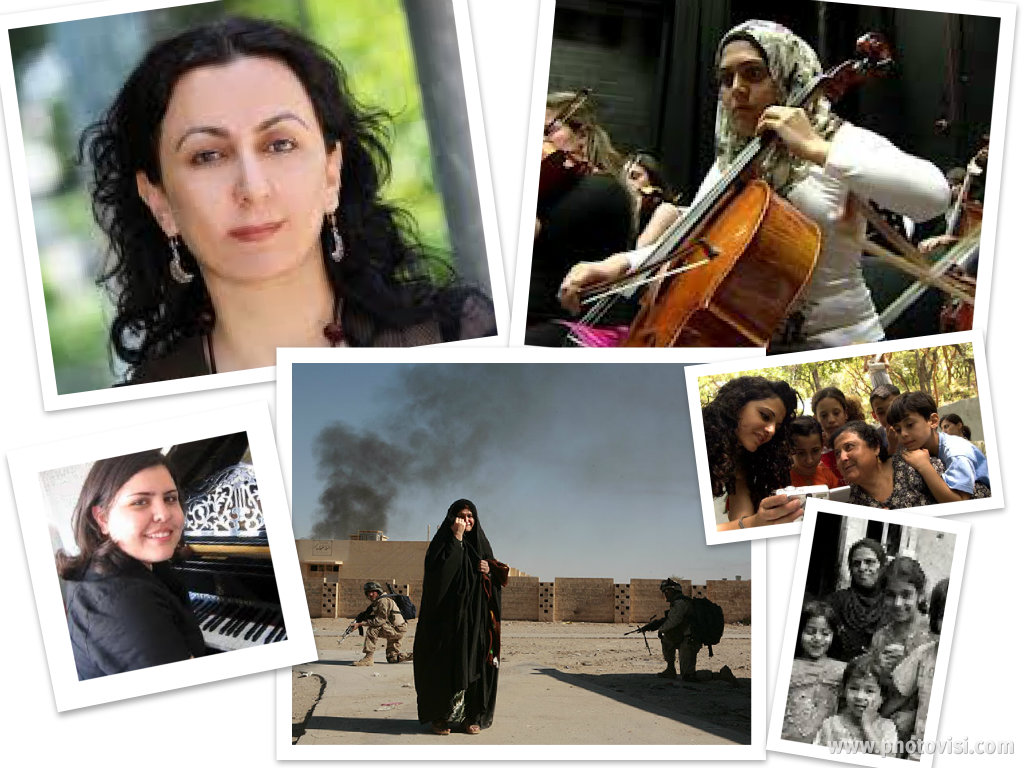
Women of Iraq: power and resistance

I am writing this after having sat in disbelief through Newsnight's Iraq: 10 Years On special tonight, in which they had 11 male speakers on stage, and just one woman. The speakers were not at all all high-level Iraq specialists and included newspaper journalists, the novelist Michael Morpurgo, politicians, writers and other politically-aware commentators with a general interest in the issue. Women experts and speakers from the audience were similarly strongly outnumbered. A very impressive woman who was a gender expert was asked about women in Iraq and gave an extremely important, troubling account of increases in trafficking, prostitution, forced marriage, rape, 'domestic' violence and the feminisation of poverty. This was simply passed over and not picked up again, as though what happens to women, the largest and most hardest-hit group in the country and in the world, is some kind of fringe, minority or side issue. Another comment the same woman made, disputing a panellist's claim that Saddam Hussein's rule had somehow smoothed over sectarian conflicts, was dismissed by Jon Simpson as "not very valuable." Thank you, white English man, for openly belittling and undermining an Iraqi woman who knows what she's talking about and thank you British Newsnight producers for making it clear that what happens to Iraqi women is not worth discussing after the issues have been brought up. And thank you for making it so clear by having 11 men and 1 woman onstage that you think women are not qualified in any way to talk about Iraq.

Newsnight is guilty of extreme discrimination against women and the argument that women speakers about Iraq, about war, about the Middle-Far East, about UK foreign policy, about public anti-war protests and about the war on terror are simply not available is totally specious. Next week the international culture and advocacy organisation The Abundance Lab and IWM North, part of Imperial War Museums, and are bringing together an all-women panel of inspiring speakers to share their tales of Iraqi women’s resistance, re-invention and strength for a unique event. Iraqi Women, Power and Resistance will mark International Women's Day and the 10th Anniversary of the 2003 Iraq War.

On Thursday 7th March 2013 from 6.00pm to 8.00pm at Imperial War Museum North, Manchester, you will hear first hand from women who fought for survival, freedom or challenged the status quo through activism, music and photography including:
  • Houzan Mahmood, international campaigner for the Organisation of Women's Freedom in Iraq and contributor to The Independent, The Guardian and The New Statesman.
  • Photographer Eugenie Dolberg who used photography with Iraqi women to help to tell their stories of bravery and resistance (as part of Open Shutters Iraq.
  • Iraqi pianist and activist, Zuhal Sultan, who founded the National Youth Orchestra of Iraq at the age of 17, will share how she used the power of music to bring the next generation together and overcome the horrors of the conflict.
If you can get there a bit earlier, from 5pm you will also get a unique advance preview of Iraq: Photographs by Sean Smith, the new display by The Guardian newspaper’s award-winning war photographer. It contains images on display for the first time alongside Smith’s award winning photography from before, during and after the Iraq War 2003.

Details:
  • Thursday 7th March 2013 from 6.00pm to 8.00pm; Sean Smith photo preview from 5pm
  • IWM North, part of Imperial War Museums, The Quays, Manchester. For directions, click here. 
  • Free event, but booking is essential via learningnorth@iwm.org.uk or 0161 836 4000