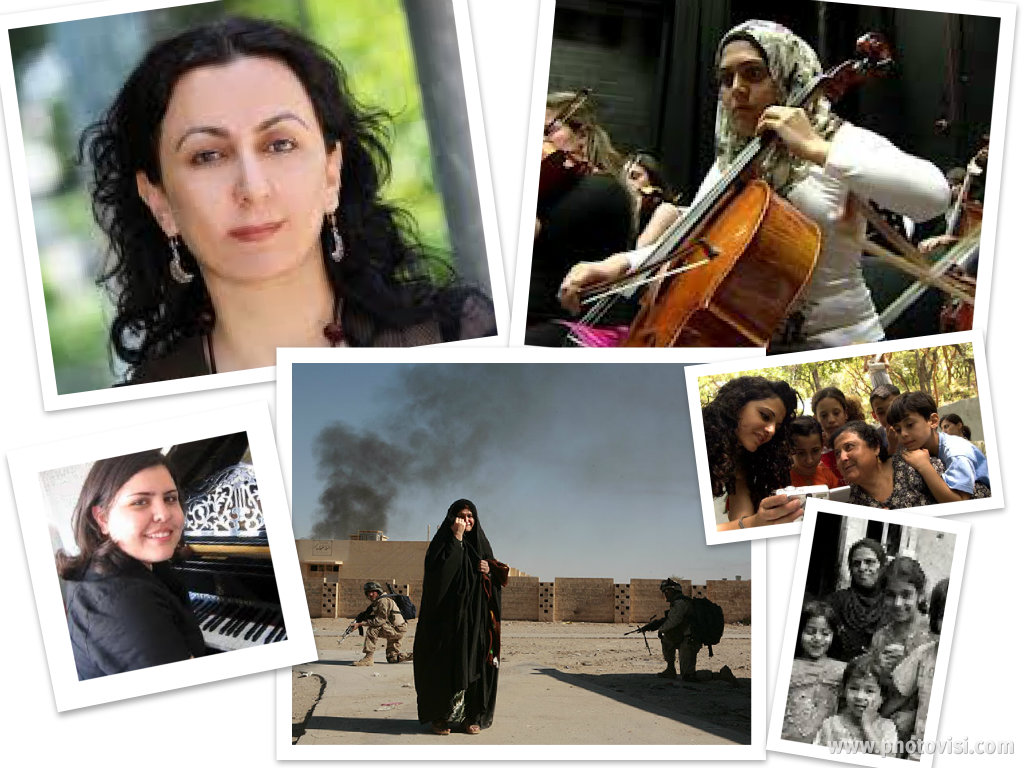
Showing posts with label Women. Show all posts

Sunday, 22 October 2017

Modern Women: 52 Pioneers by Kira Cochrane

An extended version of a BBC Arts article I published earlier this year. The original piece is here.

It’s not often that one book weaves together the stories of a Russian cosmonaut, an American pilot, a German Resistance fighter, a Kenyan environmentalist, a Japanese mountaineer and an Icelandic pop star. Kira Cochrane’s book Modern Women: 52 Pioneers achieves such a feat. A beautifully produced, inspiring and revelatory edition of potted biographies, it crosses disciplines, countries and centuries, with one aim: to celebrate “women who led really big lives, who broke down boundaries, who make us think differently about the possibilities for women,” says Cochrane.

Modern Women: 52 Pioneers includes celebrated figures like TV mogul Oprah and architect Zaha Hadid, photographers Lee Miller and Dorothea Lange, scientists, athletes, artists and international activists “who pioneered the fight for LGBT rights, who were at the forefront of the civil rights movement, who championed equality and freedom.” Cochrane says it was important to “make sure there was a really big spread of representation, geographically and historically. I [also] wanted to bring to life the stories of women who’re often unheard.”

Cochrane is quite the modern pioneer herself. She is Opinion editor at The Guardian, one of the world’s most-read broadsheets, as well as the author of two acclaimed novels, The Naked Season and Escape Routes for Beginners, and editor of the feminist anthology Women of the Revolution.You could say Cochrane’s glittering career is an indication of how positively things have changed for women over the centuries. The acknowledgements at the end of the book are a sisterly and grateful roll call of Cochrane’s equally-celebrated women peers, colleagues and allies in the British media.

However, reading through the stories of the women in Modern Women: 52 Pioneers, whatever the woman’s profession and whatever century or country she’s working in, discrimination, sexual violence, betrayal, belittlement, abuse, marginalisation  and injustice - perpetrated against men by women - are perennial obstacles. The book reminds us how far we’ve come, how much is possible for women, and yet how much still stands in our way.  

I’m interviewing Cochrane at her home on a rare day off. At the end of the garden is a beautiful white wooden writing shed, its desk and floors stacked high with hundreds of in-depth studies of the lives and work of the women in the book. The stacks represent “this huge swathe of biographies, written by other women, over the last fifty years. What’s happened since 1970s feminism is a huge number of women authors making sure other women aren’t forgotten. It’s been a revolution on the bookshelves,” says Cochrane. 

Leaning against one wall is a huge cork board (below) of pinned black and white pictures of stars from the heyday of old Hollywood: inspiration for a possible new novel. “The best times in my life, the most euphoric moments have been writing fiction…like you were flying, like you were in another world. And that makes up for the other times when you’re agonising because you can’t make this perfect thing in your head translate onto the page.” Cochrane’s rich and ready humour and gorgeous treacly voice remind me of Frances de la Tour and indeed it’s no surprise to find out that at the very beginning of her career, it was a toss-up between acting and writing; “writing a novel,” she says, “is the closest thing to acting because you’re thinking your way into a character.”

When we return to talking about Modern Women and I marvel at the research she’s done, she says gleefully, “When I’m in, I’m all in! It was a real joy to absorb myself with the worlds of other women, who in every case were phenomenally accomplished but also courageous, who got on with it and took a risk. I’d hope Modern Women is a positive contribution to the [feminist] movement, so people can read it and feel uplifted and inspired by all the work these incredible women have done.”

Research stacks for Modern Women: 52 Pioneers

Kira Cochrane's writing shed
Modern Women: 52 Pioneers
Modern Women: 52 Pioneers by Kira Cochrane was published on 2nd March by Frances Lincoln

Monday, 29 December 2014

Wednesday, 6 March 2013

"Nothing for us, without us." Women rise in Afghanistan, Malawi, Nepal, Zambia, Zimbabwe and Ghana.

In February Womankind Worldwide welcomed their partner women’s rights activists from Africa and Asia to London to share their experiences and expertise of women’s leadership and political participation. Further images from the day, all taken by Abi Moore, can be viewed at the bottom of this article.


At the Emmeline Pankhurst statue with Seema Malhotra MP

From countries as diverse as Afghanistan, Ghana, Nepal and Zimbabwe, participants faced a similar challenge – how to overcome the exclusion of women from political and public life.  Despite their different contexts, cultures and political systems, the women highlighted some common problems and common solutions.

Women’s voices must be heard from every corner and at every level. Women are not a homogenous group, and their participation in politics must reflect their diversity.  Durga Sob, founder of the Feminist Dalit Organisation of Nepal said, 
“Dalit women are doubly discriminated against in political parties – Dalit forums are run by Dalit men, and women’s wings of parties are run by ‘high-caste’ women."  
Young women, disabled women, women from ethnic and religious minorities often face multiple barriers to accessing decision-making spaces, and they must be supported.

The women were united in their commitment to focusing on local as well as national politics. Local level is where many of the decisions affecting women’s daily lives are made, and as Wangechi Wachira from Kenya’s Centre for Rights and Awareness said, 
“to be a leader, it starts at family level, and then changes happen at community level.”
 Civil society, and in particular women’s right organisations, provide fertile training ground for women’s leadership, and enable women’s voices to be heard.  Maryam Rahmani, of Afghan Women’s Resource Centre, said,  
“we need to find space for women to speak about the issues that affect them, even when it’s difficult." 
In Afghanistan, where 87% of women have experienced some form of violence, and women activists and politicians are routinely threatened, attacked and killed, this work is vital and dangerous.

Women’s rights organisations help to build women’s confidence and skills, create opportunities and access to political spheres. When women do get into positions of influence and power they are supported to negotiate corridors of power, build networks, and advance women's rights.

The activists were unanimous in the need for affirmative action to level the playing field between women and men.  Whether through political parties, reserved seats or quota systems, the only countries that have made significant progress are those that have taken specific measures.  And compared to those countries, the UK does not perform well.  In Afghanistan 28% of MPs are women, in Rwanda it’s 56% and Mozambique 43%, compared to the UK’s paltry 22%. 

The voices of women from all walks of life need to be heard in all places of power. From community forums to the halls of national parliaments, and on the international stage, as Fanny Chirisa from Zimbabwe’s Women in Politics Support Unit said, 

“Nothing for us, without us."
*****

The organisations attending were as follows:

  • Afghanistan: Afghan Women Resource Centre (AWRC)
The Afghan Women Resource Centre provides practical education to girls and women who were forbidden to learn under the Taliban.Their programmes allow women to learn in a safe environment, with a focus on vocational subjects including journalism, business skills and tailoring, in order for women to be able to earn an income and live independently. They also teach literacy, civil & political rights, and women & family law.

Attending: Maryam Rahmani, Country Representative. Maryam got involved with AWRC by doing short management courses when she was at school in Peshawar, Pakistan. In late 2002 her family came back to Afghanistan, where AWRC had opened a sub-office, where she began working. In the meantime Maryam passed her exams and joined Kabul University, eventually graduating with an economics degree in 2007. The
university faculty board wanted to recruit Maryam as assistant to a professor but only on the condition that she left AWRC. Maryam refused as she wanted to continue helping women.


  • Malawi: National Women’s Lobby Group (NAWOLG)
Potential female political candidates in Malawi often struggle with lack of funds, social pressures to stay at home and patriarchal political organisations. NAWOLG’s goal is to get more women to become involved in the democratic process as voters and representatives. It has a team of professionals specialising in gender, human rights and civic education issues, who help provide training and support to women inside and outside of politics.

Partners attending: Faustace Chirwa, Founder/Executive Director. A gender and women’s rights activist for 17 years, Faustace continues to promote women’s participation in the socio-economic development of Malawi and in political decision making.

And Atupele Chirwa, Acting Executive Director. Atupele started off volunteering with NAWOLG in 2003 and is now acting Executive Director. She focuses on sexual reproductive health and rights issues of young people in Malawi.

  • Nepal: Feminist Dalit Organization (FEDO)
The Feminist Dalit Organization was founded in 1994 by a group of Dalit (low caste) women aiming to fight for their rights and overturn caste and gender discrimination which causes women and especially Dalit women to be treated as second class citizens facing very high levels of sexual and domestic violence. FEDO educates women on their rights, offers counselling and organises mass protests and community events to raise awareness.

Partner attending: Durga Sob - FEDO. Durga Sob is a Dalit woman who founded the Feminist Dalit Organisation in 1994 to combat caste and gender-based discrimination in Nepal. Durga is renowned as a passionate feminist and activist in defending the rights of Dalit women in Nepal. She says,
“There used to be no Dalit women in positions of power. Now 25 Dalit women have been
elected as members of the Constituent Assembly and this is one my happiest achievements”.
- Case study: Pabitra's Story
- Example of the kind of context they’re working in:  Women Human Rights Defenders Beaten and Detained

  • Zambia: National Women’s Lobby (ZNWL)
ZNWL aims to promote the representation and participation of women at all levels of decision-making through lobbying, advocacy and capacity-building. It provides education, runs community forums, provides leadership courses in schools to boys and girls through their innovative ‘Girl’s Leadership Clubs’, monitors elections and provides support to women involved in politics, for example through Women’s Radio Clubs, supporting isolated rural women to gather to listen to news about politics and current affairs and discuss together so that they’re better equipped to take part in the democratic process.

Partners attending: Juliet Kaira Chibuta, Executive Director. Juliet is a development specialist and a journalist by trade. She worked for national print media organizations including the Zambia Daily Mail and National Mirror where she held various positions including editor. Ms Chibuta has also sat on various boards of media and women’s organisations.

And Beauty Katebe, National Chairperson. Beauty is a human resource expert and works in Zambia’s Ministry of Health. She has vast experience in women and youth issues, democratic processes, capacity building of women, governance and elections issues. She is the current National Women Council Chairperson of the Agriculture, Technical and Professional Union of Zambia.


  • Zimbabwe: Women in Politics Support Unit (WiPSU)
The Women in Politics Support Unit (WIPSU) provides support to women in politics in Zimbabwe to help increase their participation and influence. It does this by providing leadership and election training for candidates; educates women MPs and councillors about their roles, connecting them with female constituents; organises community forums; and lobbies political parties to implement gender quotas.

Partner attending: Fanny Chirisa, Director. Born in Mutare, Fanny has worked with The Federation of African Women’s Clubs, The Voluntary Organizations in Community Enterprise, Red Banner, Zimbabwe Women’s Resource Center & Network and WiPSU. During the outreach process of the current Zimbabwean Constitutional Reform Process, Fanny was invited to be team leader representing civil society.
They led teams of reporters capturing the views of citizens across the country.

- Case study: Not Service But Power

  • Ghana: Women in Law and Development in Africa (WiLDAF)
Since its inception in Harare, Zimbabwe, in 1990, the network has grown to encompass 31 countries, 500 organisations and more than 1,200 individual members. At the national and international levels, the WiLDAF network lobbies for laws that promote women's rights. In Ghana, WiLDAF offers free legal counselling as well as training in legal literacy.

Partners attending: Bernice Sam, Executive Director (Ghana branch). Bernice Sam is a lawyer and human rights activist. She spearheads the campaign for the participation of vulnerable groups in democratic processes including organising women’s dialogues with presidential candidates. She also led the struggle for the protection of the rights of people in non-formalised relationships. Bernice has written and co-authored books on HIV/AIDS, violence against women and the property rights of women.

And Frank Bodza, Programme Manager for Governance (Ghana). Frank has more than nine years’ experience in both local and national governance; having worked with an MP for four years prior to joining WiLDAF in 2005. He is a gender and human rights activist who had carried out numerous public education programmes on women’s rights issues. He is experienced in capacity-building, mobilization, networking and coalition-building and was part of groups that observed the December 2012 general elections in Ghana. He is married with two children.

Richard Sam, Programme Assistant for Governance (Ghana). Richard did his national service with the Ministry of Local Government and Rural Development for one and half years before joining WiLDAF in 2009. He is a volunteer from WiLDAF Ghana on the Coalition of Domestic Elections Observers (CODEO) and the Civic Forum Initiative. Both groups have observed various elections including the December 2012 general elections in Ghana.

- Context can be found here.

  • Ghana: The Gender Studies and Human Rights Documentation Centre (GSHRDC)
The Gender Studies and Human Rights Documentation Centre works to promote and protect women’s rights, running a number of projects in rural Ghana working to end violence against women and reduce women’s vulnerability to HIV infection.

Partners attending: Dorcas Coker-Appiah, Executive Director. Dorcas Coker-Appiah is a lawyer by profession and a feminist. She is a women’s rights activist in Ghana and a member of a number of women’s rights organisations. Dorcas has a lot of international experience, having served two terms as a member of the United Nations Committee on the Elimination of Discrimination against Women.

- On work to end the practice of ‘widow inheritance’ read this piece here.

  • Kenya: Center for Rights Education and Awareness (CREAW)
CREAW’s mission is to transform Kenyan society through the promotion and expansion of women’s human rights, rule of law and social justice. They provide legal aid and health services to thousands of female survivors of rape and domestic violence, produce informative radio shows and give training and support to community organisations.

Partner attending: Wangechi Wachira, Executive Director. Wangechi Wachira has more than 10 years of experience in senior management. She has experience in lobbying and advocacy, gender integration and inclusion, human rights and development issues.


Dorcas Coker Appiah 

Atupele Chirwa
Fanny Chirisa

Frank Bodza

Faustace Chirwa

Maryam Rahmani
Wangechi Wachira

A special post (c) Sarah Jackson at Womankind Worldwide with enormous gratitude and admiration

Bidisha is a 2013 Fellow for the International Reporting Project. She is reporting on issues of global health and development. 

Tuesday, 26 February 2013

Women of Iraq: power and resistance

I am writing this after having sat in disbelief through Newsnight's Iraq: 10 Years On special tonight, in which they had 11 male speakers on stage, and just one woman. The speakers were not at all all high-level Iraq specialists and included newspaper journalists, the novelist Michael Morpurgo, politicians, writers and other politically-aware commentators with a general interest in the issue. Women experts and speakers from the audience were similarly strongly outnumbered. A very impressive woman who was a gender expert was asked about women in Iraq and gave an extremely important, troubling account of increases in trafficking, prostitution, forced marriage, rape, 'domestic' violence and the feminisation of poverty. This was simply passed over and not picked up again, as though what happens to women, the largest and most hardest-hit group in the country and in the world, is some kind of fringe, minority or side issue. Another comment the same woman made, disputing a panellist's claim that Saddam Hussein's rule had somehow smoothed over sectarian conflicts, was dismissed by Jon Simpson as "not very valuable." Thank you, white English man, for openly belittling and undermining an Iraqi woman who knows what she's talking about and thank you British Newsnight producers for making it clear that what happens to Iraqi women is not worth discussing after the issues have been brought up. And thank you for making it so clear by having 11 men and 1 woman onstage that you think women are not qualified in any way to talk about Iraq.

Newsnight is guilty of extreme discrimination against women and the argument that women speakers about Iraq, about war, about the Middle-Far East, about UK foreign policy, about public anti-war protests and about the war on terror are simply not available is totally specious. Next week the international culture and advocacy organisation The Abundance Lab and IWM North, part of Imperial War Museums, and are bringing together an all-women panel of inspiring speakers to share their tales of Iraqi women’s resistance, re-invention and strength for a unique event. Iraqi Women, Power and Resistance will mark International Women's Day and the 10th Anniversary of the 2003 Iraq War.

On Thursday 7th March 2013 from 6.00pm to 8.00pm at Imperial War Museum North, Manchester, you will hear first hand from women who fought for survival, freedom or challenged the status quo through activism, music and photography including:
  • Houzan Mahmood, international campaigner for the Organisation of Women's Freedom in Iraq and contributor to The Independent, The Guardian and The New Statesman.
  • Photographer Eugenie Dolberg who used photography with Iraqi women to help to tell their stories of bravery and resistance (as part of Open Shutters Iraq.
  • Iraqi pianist and activist, Zuhal Sultan, who founded the National Youth Orchestra of Iraq at the age of 17, will share how she used the power of music to bring the next generation together and overcome the horrors of the conflict.
If you can get there a bit earlier, from 5pm you will also get a unique advance preview of Iraq: Photographs by Sean Smith, the new display by The Guardian newspaper’s award-winning war photographer. It contains images on display for the first time alongside Smith’s award winning photography from before, during and after the Iraq War 2003.

Details:
  • Thursday 7th March 2013 from 6.00pm to 8.00pm; Sean Smith photo preview from 5pm
  • IWM North, part of Imperial War Museums, The Quays, Manchester. For directions, click here
  • Free event, but booking is essential via learningnorth@iwm.org.uk or 0161 836 4000

Tuesday, 21 February 2012

A letter from Malawi: powerful acts of challenge and change

The below was written by Fiona Morrell at Theatre for a Change, who contacted me yesterday. What she communicated was so powerful I asked if I could reproduce her words here. She has many interesting and urgent things to say about Malawi, women, power, abuse, HIV, equality and education. If you would like to know more about Theatre For A Change, please email fiona.morrell@tfacafrica.com

Theatre for a Change was founded in 2003 in Ghana as a NGO focused on HIV prevention. In 2007 it opened an office in Malawi which now employs over 60 people. HIV disproportionately affects women. We use experiential, participatory approaches to equip profoundly marginalised people, almost always women and girls, with the skills and knowledge to protect themselves from HIV and advocate for their gender and sexual rights.

In Malawi we work in two main ways, through formal education, empowering young teachers with skills to pass through to children and make their classrooms more equitable places, and our community work where we specifically work with sex workers.

Sex workers are the most at risk group in the country with an HIV prevalence rate of 70.1%. Our cohort of sex workers go through a process of behavioural change workshops to explore how to gain self confidence and a thorough knowledge of their rights. They then become empowered to become advocates for their rights through legislative theatre. Legislative theatre, based on the ideas of Boal and Friere, is based on the belief that we can tell someone to do something all they like, but it is only through standing in their shoes that real change can be manifested.

The women take their improvisations into places where abusers are, to bars, to the police station. They start performing their stories in their language, and then invite an audience member to take on a role of a vulnerable character. Suddenly a client starts to feel how difficult it is to negotiate for the use of a condom, to feel frightened, to have no choices. The effect is very powerful. Recently the women took their work into Parliament - something which was highly controversial bearing in mind Malawi does not properly acknowledge the presence of sex workers. Their advocacy will help push for legal clarity of their status - something which is currently unsure. They also work closely with the police, the group whom they identify as most likely to abuse them, and who subsequently have the second highest HIV prevalence rate in the country. We hope this will lead to long term systemic change.

One year ago the women launched the equals campaign, demanding the right for women to be seen and treated as equals. This campaign is growing and gathering support from women across the country. Our cohort of women working as sex workers are also given the opportunity to learn income generating skills: metal work, sausage making, hairdressing or dress making which will give them options to leave sex work in the future.

We are unusual in dealing with HIV through promoting gender equality, but we believe, that sustainable prevention will happen only when women are empowered to protect their sexual health. We are soon to start a similar project with sex workers in Ghana.

I believe passionately that the work the women in Malawi do should be heard about and celebrated - not only because of their bravery and determination, but to emphasise that one cannot separate health, social well being and gender - that if we continue to ignore gender inequity we will fail to tackle other great development issues - this really isn't rocket science but it is not, in my opinion, talked about or valued enough.

Sunday, 2 October 2011

!Women Art Revolution: a brilliant and salutary film by Lynn Hershman Leeson


I am writing to celebrate the film Women Art Revolution, poster image above, which is being showcased by one of my favourite London galleries, the Whitechapel. For over forty years, Director Lynn Hershman Leeson has collected hundreds of hours of interviews with visionary artists, historians, curators and critics who shaped the beliefs and values of the Feminist Art Movement and reveal previously undocumented strategies used to politicize female artists and integrate women into art structures.

!Women Art Revolution elaborates the relationship of the Feminist Art Movement to the 1960s anti-war and civil rights movements and explains how historical events, such as the all-male protest exhibition against the invasion of Cambodia, sparked the first of many feminist actions against major cultural institutions. The film details major developments in women’s art of the 1970s, including the first feminist art education programs, political organizations and protests, alternative art spaces such as the A.I.R. Gallery and Franklin Furnace in New York and the Los Angeles Women’s Building, publications such as Chrysalis and Heresies, and landmark exhibitions, performances, and installations of public art that changed the entire direction of art. New ways of thinking about the complexities of gender, race, class, and sexuality evolved. The Guerrilla Girls emerged as the conscience of the art world and held academic institutions, galleries, and museums accountable for discrimination practices.

Over time, the tenacity and courage of these pioneering women artists resulted in what many historians now feel is the most significant art movement of the late 20th century. Carrie Brownstein composed an original score to accompany the film. Laurie Anderson, Janis Joplin, Sleater-Kinney, The Gossip, Erase Errata and Tribe 8 are some of the gifted musicians who contributed to our soundtrack.

About Lynn Hershman Leeson:
Writer / Director / Producer / Editor Lynn Hershman Leeson pioneered site specific, performance and interactive media. Most recently, she was honored by the Digital Art Museum in Berlin with the d.velop digital art award (d.daa), the most distinguished honor for lifetime achievement in the field of new media. Her other honors include the prestigious Golden Nica Prix Ars Electronica, the ZKM/Seimens Media Arts Award and, as a Sundance Screenwriter Fellow, she was honored with the Flintridge Foundation Award for Lifetime Achievement in the Visual Arts. She has also received The Alfred P. Sloan Film Prize for writing and directing Teknolust, and in 2006, the International Association of Digital Arts award for “innovative storytelling,” Zero One Prize for “Media that Matters” and a Creative Capital Grant for her documentary, !Women Art Revolution. In 2009, she became a Guggenheim Foundation Fellow and received a Lifetime Achievement Award from Siggraph. Hershman Leeson wrote, directed and produced the feature films Teknolust, Conceiving Ada and Strange Culture, in addition to 14 other films and shorts. The films starred Tilda Swinton, were shown at the Sundance Film Festival, Toronto International Film Festival and Berlin International Film Festival, and were all internationally distributed. Her artwork is held in numerous collections, including at the Museum of Modern Art (New York), The National Gallery of Canada, DG Bank (Frankfurt) and The Walker Art Center (Minneapolis). She has published extensively, is the Chair of the Film Department at the San Francisco Art Institute and Emeritus Professor at the University of California.

Screening dates for !Women Art Revolution: 
  • The official UK Première, Launch and In Conversation between Lynn Hershman Leeson & Achim Borchardt-Hume, Whitechapel Gallery's Chief Curator, is on Saturday 15 October at 3pm. The price is £6/ £4 concessions.
  • Free screenings are on Sunday 30 October at 3pm, Sunday 13 November at 3pm and Sunday 27 November at 3pm
  • There will be a screening and In Conversation between Griselda Pollock and Lynn Hershman Leeson on Sunday 11 December at 3pm, price £6


text (c) Whitechapel Gallery press

Thursday, 5 May 2011

Women Make Sculpture

Christie Brown, Lost and Found

The Pangolin Gallery in London (Kings Place, 90 York Way, N1 9AG) is launching Women Make Sculpture, which will run from 19th May until 18th June.


Despite the huge success of a handful of sculptors such as Barbara Hepworth, Elisabeth Frink and Louise Bourgeois, women are still under-represented in major art shows, galleries and museums and under-valued on the art sales market. The Royal Academy’s current exhibition Modern British Sculpture which has received so much criticism for leaving out established male sculptors such as Antony Gormley (ha!) and Anish Kapoor. But what about the women? Is such a meagre selection really representative of the current state of British sculpture? Pangolin London thinks not.

Coinciding with the centenary year of International Women’s Day, Pangolin London will celebrate female achievement in sculpture with the exhibition Women Make Sculpture, an all female show highlighting the diversity and creativity of women sculptors today. The exhibition will bring into the spotlight a number of established female artists including Sarah Lucas, Dorothy Cross, Ann Christopher and Alison Wilding as well as emerging names such as Polly Morgan, Abigail Fallis, Rose Gibbs and Briony Marshall.

Women Make Sculpture provides an opportunity to focus on a selection of sculpture inspired by topical issues that concern women today such as war, mental health, sex, childbirth and science. Director of Pangolin London, Polly Bielecka, notes: “The exhibition is not intended to tackle gender superiority; rather it hopes to question whether female artists bring something different to contemporary British sculpture.”

The exhibition will include an eclectic mix of work in a variety of media ranging from Almuth Tebbenhoff’s powerful yet intricate steel wall pieces to Polly Morgan’s taxidermy constructions, and from Deborah van der Beek’s emotive horse head Collateral made from the detritus of war to Rose Gibbs’ controversial Mountain of figures and penises violently expelling bodily fluids.

Pangolin London is well-placed to do a survey show of this kind thanks to its unique affiliation with Europe’s largest sculpture foundry Pangolin Editions and its remit to promote sculpture in all its forms. Pangolin London will also host a panel discussion to coincide with the exhibition on Monday 23rd May at Kings Place. This will include both artists exhibiting in the show and guest speakers to encourage a lively debate.

To book tickets please click here.
A fully illustrated catalogue will accompany the exhibition.
The Pangolin Gallery is open Tues - Saturday 10am-6pm


This text is taken from the Pangolin's press release.

Friday, 1 April 2011

4th MaxMara Art Prize shortlist announced

Last night the Whitechapel Art Gallery and MaxMara announced the names of the five artists who have been shortlisted for the fourth MaxMara Art Prize For Women and launched the exhibition of the most recent winner, Andrea Buttner:

Extract of work by MaxMara Art Prize winner Andrea Buttner, currently on
show at the Whitechapel Gallery.
From drawing and sculpture to filmmaking and performance the MaxMara Prize this year offers real diversity in practice whilst showcasing some of the best work by women artists in the UK today. The short-listed artists are Christina Mackie, Avis Newman, Emily Wardill, Spartacus Chetwynd and Laure Prouvost.  The Judging panel was chaired by Iwona Blazwick, Director of The Whitechapel Gallery and included Gilda Williams, critic and lecturer; Amanda Wilkinson, gallerist; Lisa Milroy, artist and Muriel Salem, collector.
The MaxMara Art Prize for Women is the only UK art prize for women and was set up to promote and nurture female artists based in the United Kingdom, enabling artists to develop their potential and providing an opportunity for them to produce new works of art.  The prize itself will result in a six month residency based in Italy and an exhibition at the Whitechapel Gallery.

An Evening With Jabba the Hutt, by Spartacus Chetwynd
Spartacus Chetwynd  (b. 1973, London) studied Social Anthropology at UCL before completing a BA in Fine Art at the Slade and an MA in Painting at the RCA.  She works in both performance and painting. Her DIY performances re-enact iconic scenes from literature, cinema and art using handmade costumes, choreography and elaborate stage sets. She has performed at Frieze Art Fair, Art Basel, ICA and Tate Modern and has had solo shows in Milan, Dijon and Zurich.

Christina Mackie  (b.1956, Oxford) studied at Vancouver School of Art and Central St. Martins. Mackie makes sets of sculptures that interlock to form installations. She has had solos shows at the Henry Moore Institute and Tate Britain and will have an exhibition at Chisenhale Gallery in London in 2012. Her work has been included in the British Art Show and the Busan Biennial. In 2005 she was awarded the Becks Futures prize and in 2010 the Hamlyn Award for Artists.

Avis Newman (b. 1946, London) studied at The Central School of Art and Goldsmiths College. Her layered, minimal canvas works, objects and works on paper show a longstanding preoccupation with the fundamental language of marking and inscribing and the initial moment of tracing. She has work in various public collections including Tate, London and The Metropolitan Museum of Art, New York.  Solo exhibitions include: Renaissance Society, University of Chicago, de Appel Foundation, Amsterdam. Camden Arts Centre, London, The Museum of Contemporary Art, Sydney.

Laure Prouvost  (b. 1978, Croix-Lille, France ) lives and works in London. She graduated from Central Saint Martins and took part of the Lux Artist Associate Program. Her work includes painting, video, sound and site specific works.  She has exhibited at Tate Britain, ICA, Serpentine and BFI. She opens a solo show at MOT International in April 2011. She was awarded the 56th Oberhausen Short Film Principal Prize (2010), a FLAMIN award  (2011) and the EAST International Award (2009).

Game Keepers Without Game, by Emily Wardill

Emily Wardill  (b. 1977) is a London-based filmmaker and performance artist. She studied at Central Saint Martins College of Art and works predominantly in film and video.  She has exhibited widely in the UK and internationally with solo shows at the ICA, London and PS1 New York; screenings at the London Film Festival and performances at the Serpentine Gallery. In 2010 she won The Jarman Award and her work is currently on show in The British Art Show at the Hayward.
Each of the artists will now be asked to create a presentation on their plans. The winner will be announced in September 2011 and the project realised during a six-month residency in 2012.  The residency is divided into two locations - the American Academy, Rome and the Pistoletto Foundation, Biella. The resulting work will then be offered to the Maramotti Collection for acquisition, and an exhibition of the resulting work will take place at the Whitechapel Art Gallery in 2013.
The Maramotti family, owners of the MaxMara Fashion Group, are major contemporary art collectors. The MaxMara Art Prize for Women is the first time the fashion house has established an arts prize in the UK and reflects the company’s strong association with art and women.  The Max Mara Fashion Group was founded in 1951 by Achille Maramotti and is now run by the next generation. The company is one of the largest women’s prêt-à-porter (ready-to-wear) manufacturers in the world, with 2082 stores and 23 different brands sold in more than 90 different countries in the world. On 29th September 2007 the Collezione Maramotti opened to the public in Reggio Emilia, Italy. For further information, please visit www.collezionemaramotti.org. The first winner of the Max Mara Art Prize for Women was Margaret Salmon, the second was Hannah Rickards and the third Andrea Büttner, whose show is currently on at The Whitechapel. For more details click here.
Iwona Blazwick OBE, Director, Whitechapel Gallery said, “The Whitechapel Gallery has a long tradition of premiering female artists and the Max Mara Art Prize is close to our heart as it champions and supports female artists.  The short-listed artists for the next award offer a snapshot of the sheer calibre of art being made by women in Britain today.  The judges very much hope to bring these artists and their work to even wider attention.  For the winner the judges are looking for something exceptional and an artistic practice that is truly fascinating, and look forward to being able to give the winner of the Max Mara Art Prize the gift of time to develop new works of art.”

For more details visit The Whitechapel Gallery website.

Tuesday, 30 November 2010

Women of the Revolution: Forty Years of Feminism, ed. Kira Cochrane

A landmark anthology of feminist writing covers forty years of zeal, wit and outrage.


The cover of Women of the Revolution.
Spot any pink? *satisfied grin*
 Can you hear that noise? It’s the sound of rebellion – one which reverberates ever louder with each successive page of this collection, which ought to be bought up, kissed, studied and prescribed by and to every woman, man, library, bookshop, cultural historian and gender studies university department in the world. Women of the Revolution is itself revolutionary in being a feminist book which does not feature any ‘ironic’ pink inking, dolls, body parts, models or other bullshit on its cover. Edited and selected by the Guardian’s women’s editor (and now staff writer) Kira Cochrane, it’s a compendium of some of the newspaper’s feminist writing from 1971 to April 2010.

Full disclosure A: one of my briefer columns (a tame one) is in it. Disclosure B: in the run up to the publication of the collection, Kira Cochrane and I have been speaking at some of the many events which are part of the current resurgence of feminist activism in this country. She has talked about the book and the inspirations and challenges of putting it together, so I’ve learned something about the thinking behind Women of the Revolution, which I am drawing on here. There were many articles to choose from in the 1970s, from interviews with Betty Friedan, Gloria Steinem, Susan Brownmiller and Simone de Beauvoir to features on women workers uniting and striking, the dismissal of men’s violence against women and attitudes to rape. The tone of these pieces is so fresh, inquisitive, exploratory and new that one is filled afresh with the energy of these political pioneers, putting into words what so many millions of women have felt. Shocking, though, that Brownmiller's famous book about rape, Against Our Will, is still so very pertinent.

In the 80s, however, there is a noticeable change as the decade wears on. The fire and inspiring rage of features about the Yorkshire Ripper case, the genius of Maya Angelou, a day at Spare Rib and the brave women of the Greenham Common anti-nuclear demonstration becomes more circumspect, more nuanced and shadowy, more troubled. There are thrilling (to me as a critic and reader) and painful (to me as a woman) articles on that particular intersection of misogyny and racism, Judaism and Islam and their attitudes to women, the challenge of making a feminism that is truly global and the first appearance of writer Joan Smith, a heroine of mine, who confronts the normality and banality of misogyny: “Women-haters are not freaks or outcasts....but ordinary men,” runs the strapline.

Compared to the other decades in Women of the Revolution, the 80s are thin and wary. It is awfully tempting to put the blame, not on male perpetrators, whose hatred and violence have never really wavered, but on one Margaret Thatcher, a woman who used her great power to make sure no other woman got anywhere near the Cabinet. As Kira said at one talk, laughing ruefully, “Thatcher pretty much killed feminism. And then we were onto the nineties and this strange thing called post-feminism. Which is funny, because that phrase presupposes that there was a feminist era, which we have now moved beyond. If there was a feminist era I’d really like to hear about it.”

What we hear about in the Guardian during the 1990s may have been written in a general climate of gender-political complacency, but it is some of the most thrilling and confrontational writing in this collection, because it makes a global, precise, holistic and ultimately devastating critique of women’s position on a broad scale. It is tough, enthralling reading, tackling women who kill violent and abusive partners, systematic rape in war, women’s survival despite violence, Catholicism and misogyny (spotting a theme here, feminist religion watchers? It’s not going so well for the holy men, those pious-faced pricks), the perceived ‘whiteness’ of Anglo-American feminism and appearances from women writers who are still stars of the paper, like Maya Jaggi, bell hooks, Beatrix Campbell, Germaine Greer and Catherine Bennett. Star billing goes to Andrea Dworkin for her painfully funny open letter to Bill and Hillary Clinton. Just to get it straight – he did not have sex with that woman. She sucked him off and spat his jizz on her frock. Because that’s so much better.

Come the 2000s, according to Kira, and obvious from this collection, the intensification and sheer urgency of feminist feeling has been reflected in the number and range of features. Each piece crackles with anger, yes, but this section of Women of the Revolution shows a marked change in tone. Underneath the ire, the humour, the punchiness and brilliance of the writing is a haunted, prowling chagrin that while so much has changed, so much remains the same. The challenge of achieving equal pay, the endemic nature of male violence against women, the question of police attitudes, sexual harassment... these issues are revisited with ever greater brilliance and incisiveness, but deeper despair. How long must we say the same things, turning ourselves inside out as we writhe in frustration while the perpetrators continue abusing and the apologists, those civilised men and women, the writers, the judges, the officials, the businesspeople, the friends of friends, the politicians, the commentariat, the dinner party guests, carry on victim-blaming?

In addition to this, though, the 2000s section very clearly reflects certain new aspects of mainstream culture, of the general society in which we all live, and which shape both women and men. These new aspects may well be a reason for feminism’s revived zeal, along with the across-the-board outrage at the Con-Dem chaps’ cabinet of Eton-educated wankers, who between them have put together a budget which punishes women. The tackiness, objectification and outright misogyny of so-called raunch culture, attitudes to working mothers, the effects of the pornification of culture, the mainstreaming of the sex exploitation industry, the realities of sex work and the consequences of porn on young men’s and women’s intimate relationships are all examined.

Feminism is about to change the world again. It did it during the Suffragette era. It did it in the 1970s. It’s doing it now, at last. It doesn’t, I admit, feel like it when you’re in the middle of it. But Women of the Revolution: Forty Years of Feminism is proof of our triumphs and a testament to our achievements, as well as a sometimes heartbreaking record of what is done to us. Many of the issues written about with such concern and revelation in the early pages of the book are now theoretical ‘givens’ in the fight for justice, emancipation and equality. The extent and seriousness of domestic violence, relationship abusiveness, rape, harassment and discrimination are accepted if not resolved. Western women’s participation in the world and our fundamental human right to have a say in what happens to us are accepted, happily or grudgingly. We are able to blow the whistle on misogyny – we can even take the government to court. And yet still, despite that, we exist in the gaps between the lies and myths told about us, the violence done to us, the excuses of those who condone the perpetrators, the use of our labour and the never-ending sneer/jeer/leer/exploit/ignore creed of regular, normal, ‘civilised’ society.

Women of the Revolution is an inspiration to activism, a spur to creativity, a spark to fellow-feeling, a prompt to sisterly glee and a brazen, honest, wide-ranging collection. It is extremely readable and funny and very, to use a patronising word, accessible. As the closing feature, an interview with the brilliant Egyptian writer Nawal El Saadawi, demonstrates, it is women’s famous strength and resilience, our ability to fight without violence, which will see us through the next forty years, whatever they bring. The last words salute her, as they salute every woman in these inspiring pages, and every avid reader, and every woman who has thought or felt that something wasn’t quite right, and did something about it: “A fighter to the last.”


Women of the Revolution: Forty Years of Feminism, edited by Kira Cochrane, is published by Guardian Books, £18.99